AI MVP Saas Application
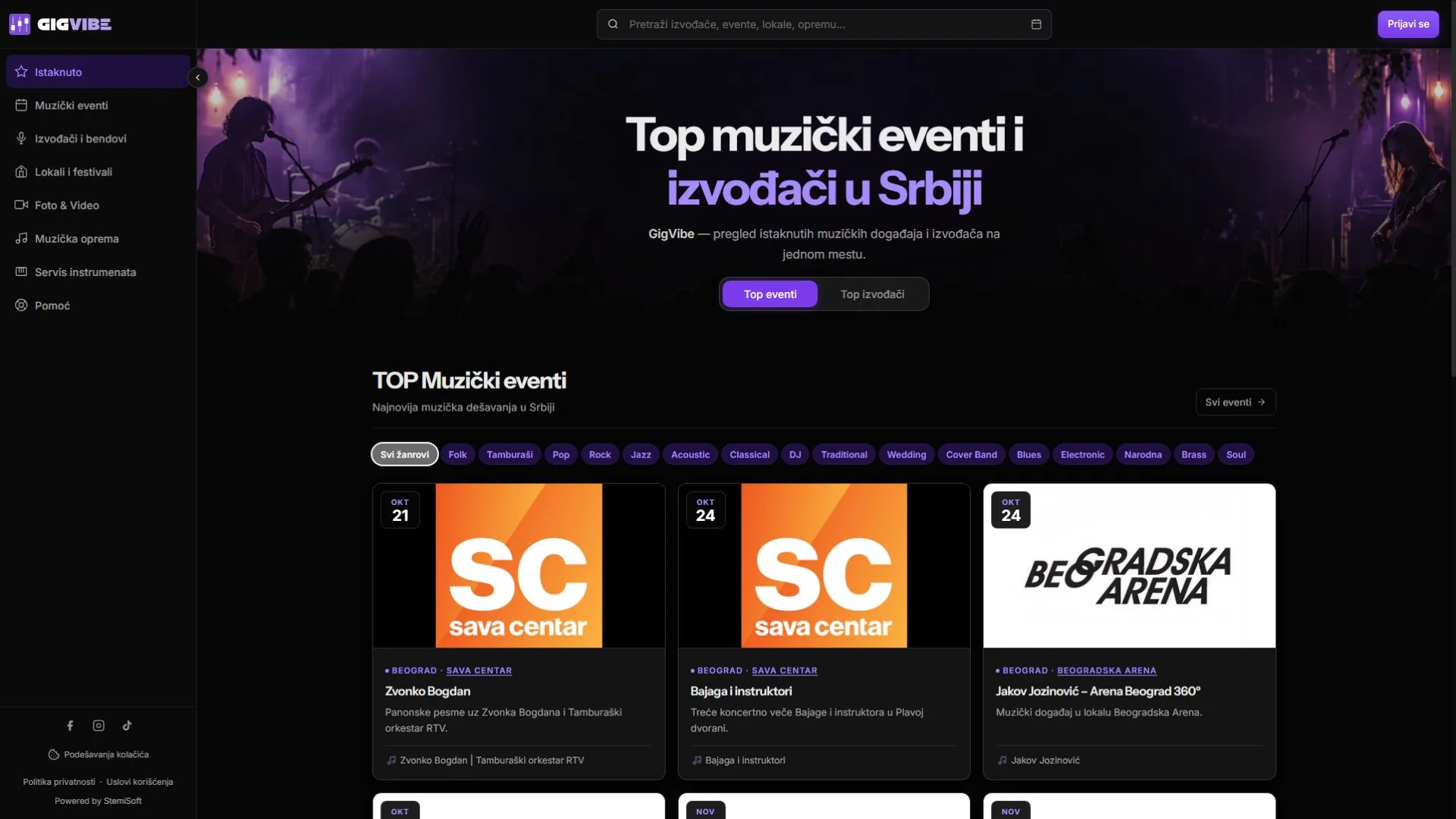
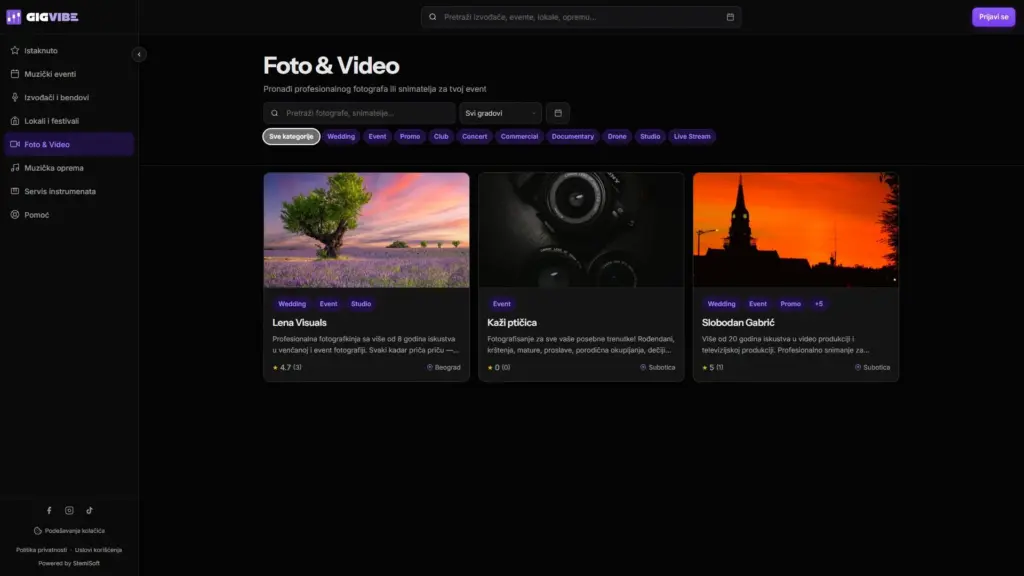
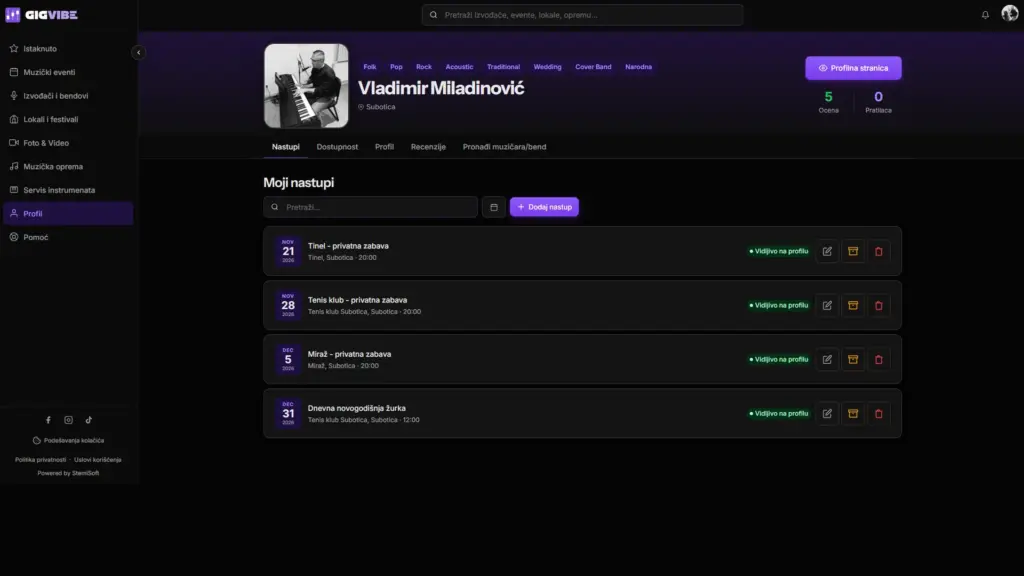
After more than 40 years of playing music, I knew how much of the local music scene depended on scattered information. An event might appear on Instagram, a venue’s Facebook page or in a group chat. Finding it often meant already knowing where to look.
GigVibe grew out of that experience. I wanted to create one place where people could discover live music and where musicians, venues and supporting businesses could build a useful public presence.
As the founder, product owner and designer, I defined the product, mapped its workflows and designed the interface. I also directed AI-assisted implementation, reviewed the work and tested the platform through real user scenarios.
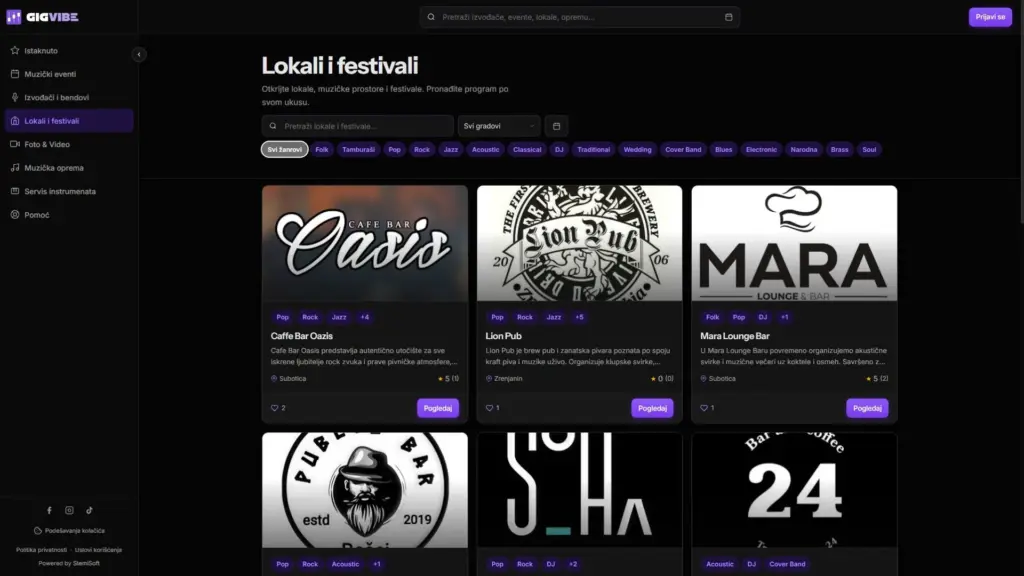
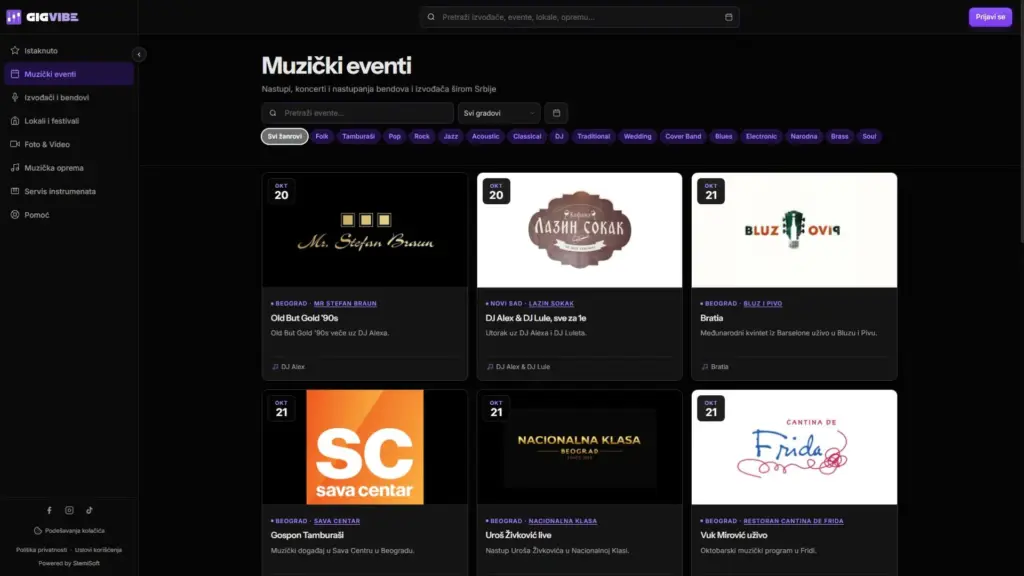
I designed GigVibe around the way people actually find live music and connect with the people behind it. Visitors can explore events by city, date and genre, discover performers and venues, and find related services without jumping between social media pages.
Each professional account has a clear purpose. Musicians and bands can present their work, share upcoming performances and give people a direct way to contact them. Venues can publish events, while photographers, video professionals, equipment providers and instrument services have profiles suited to what they offer. These differences shaped the navigation, profile layouts and permissions throughout the platform.
I built a shared design system to keep the experience consistent across desktop, tablet and mobile. Reusable cards, filters, calendars and forms make the different sections feel familiar. Following profiles and receiving updates helps users stay connected to the performers and places they care about.
To support the event catalogue, I developed DEU, short for Daily Event Update. It is a functional engine that discovers music events from approved sources and creates event listings for GigVibe. It structures the collected information, checks for duplicates and keeps imported records separate from manually created events, so automated updates do not overwrite content entered by users.
Behind the public interface, administrative tools support account approval, content management and role permissions. This gives the platform the controls it needs to operate beyond the initial launch.
I led the product architecture, UX and UI design, using AI tools to assist development. Implementation was reviewed against defined requirements, with functional checks and production testing used to assess the actual user experience.
GigVibe launched publicly on October 1, 2026.
The result is a live platform serving Serbia’s music community, with event discovery, professional profiles, following, contact options and notification workflows in one product.
For me, the project brought product strategy, UX/UI design and technical delivery into the same process. I took an idea rooted in my own experience as a musician and turned it into an application people can use.
Launch also changed how I evaluated the product. Real devices and everyday use exposed issues that automated checks alone could not settle. Those findings now guide ongoing improvements, with musician collaboration and further integrations forming the next stage of GigVibe.